

“My kid’s being bullied. What do I do?”
“For the past few months, I’ve been watching my kid change. He used to be the light of our house. Now sometimes I look over and realize he’s been sitting quietly at the table for a long time, and it startles me. I think it’s something happening at school with the other kids. He’s told me before that they tease him — his backpack is “so baby,” his haircut makes him look like a mushroom, even his jeans being pressed gets made fun of. Those ones I don’t really understand. But the ones that actually hurt are when kids tell him he smells like curry, and when he heard them snickering about him being “weird” after we sent his class Diwali sweets.
I know kids are mean. It wasn’t like everyone was nice to each other growing up in India either. But I go back and forth — sometimes I’m furious at these other kids, and sometimes I’m just frustrated that my son takes it this hard, when I’m trying so hard to remind him he’s a good kid and none of this is true about him.
I don’t know what to do about the teacher. Part of me worries that going to her will make things worse, and I want him to be able to handle this himself. But it’s hard to just watch him struggle. Any help you can offer?”
Kavita answers
I'm so sorry to hear you and your son are having this experience. While you're right that bullying is common across the world, that doesn't take away the pain we feel when we see anyone retreat into themselves in response to cruelty from others.
I can hear how hard you're working to show your kid that you're there, that you want to understand, that you want to support him and help him feel better. I think it's possible that your child is picking up on your own conflict between wanting to support him and wanting him to move on, to ignore it, to be "strong" — and it is this that is leaving him a bit stuck about how he wants to approach the situation. It may help to reflect on what you really want from him in this moment, what you received from elders when you were experiencing this kind of thing growing up, and how that old conflict might still be working through you now. In my experience, it's when we're torn about how we want to approach something that we tend to experience the most distress. When you can settle into how you want to approach your kid, and what you actually think you should do, I suspect you'll both feel a little more "unstuck."
Let me make the case for going in supportive, open-ended, and curious about his experience first. Ask him if you can join him in something he wants to do (that isn’t screen related!). Make sure you put away your phone, no matter how boring the activity he’s chosen is, and be as present as you can. Ask him how he’s doing, name what you’ve seen (as objectively and nonjudgementally as you can, so “you’ve seemed quieter recently”, rather than “you’re shutting down completely”) and be open to however he responds. Ask questions, then ask more questions. Before you add any of your own advice or commentary, make sure you’ve understood what he’s expressing first by paraphrasing and repeating it back to him. It’s slow work to establish trust, rapport, and safety, but it’s always, always worth it. There will be space to share your own experiences, to relate to him, to offer suggestions and strategies - but only after you’ve really understood the layers to why this teasing is hitting him so hard. Only then can you offer the advice that really touches what he actually needs.
As you’ve hinted at in your message, there’s a difference between the comments about a backpack or jeans, and barbs about his culture or his religion. If he’s rocking a Bluey backpack in 5th grade, you might consider buying the new backpack or helping him accept that it’s okay to have different preferences than his friends. It might be tough to embrace that the trend is faded, ripped clothing and the love you put into pressing his jeans is actually creating challenges, but you might find that working to fit in is worth it at an age where belonging is everything. Same goes for the haircut. As you seem to already know, it’s a tough thing with bullying, because when it comes to these superficial things, it can be a slippery slope in accommodating the nagging of the school yard bullies who are assessing reactions more than they’re really evaluating backpacks. If your kid likes his jeans pressed, or wearing his Bluey backpack, help him ease any dissonance he’s feeling about whether he SHOULD change his opinions about these things. He might find that deciding he DOES like his choices is enough to let the bullying roll off his back, or that actually being able to tell you he wants something new actually resolves some of the distress he’s been feeling.
Of course the “curry” comment and the “weird” comment post Diwali land differently for him, and they’re not as easily resolved as buying a new backpack. They’re meant to single him out for being different, and they sting. There’s a strong chance your kid smells fine, and celebrating your traditions with the classroom is probably celebrated by most of the students and the teachers, regardless of what the bullies have to say. The bully/ies are using cultural tropes and stereotypes to lob a particularly painful insult at your son, in the desire to single him out and make him feel confused, hurt, and anxious about his cultural identity. Bullying is at its cruelest when it’s centered on the things that are core to us, the ones that we can’t change. It’s also more straightforward to address. Help him instill pride in his culture and everything it brings him - challenges and strengths all together. Laugh together about what your coworkers might have said at some point about a microwaved dish, and how Mom’s dal is worth some teasing (it may not feel true yet, and don’t push him if it isn’t, but laughing together when you can, will be a key part of the healing). If you’re so inclined, use Hindu scriptures to help talk about how to develop our confidence in ourselves. Prahlada, in the Bhagavata Purana, is a child who's tormented — by his own father, no less — specifically because he won't abandon what he holds sacred. He doesn't survive that by hiding it or shrinking himself to be less conspicuous. He stays exactly who he is, and protection ultimately arrives in a form nobody in the room expected or planned for. Your son doesn't need the drama of that story's ending to take something from its shape: there is nothing embarrassing about enjoying Indian food or celebrating the holiday your family celebrates, and staying rooted in that isn't the same as being unable to let things go. If he can make the choice to be confident in his identity, rather than questioning if he should reject it, he’ll have a shield against the sharp self doubt that comes with being bullied.
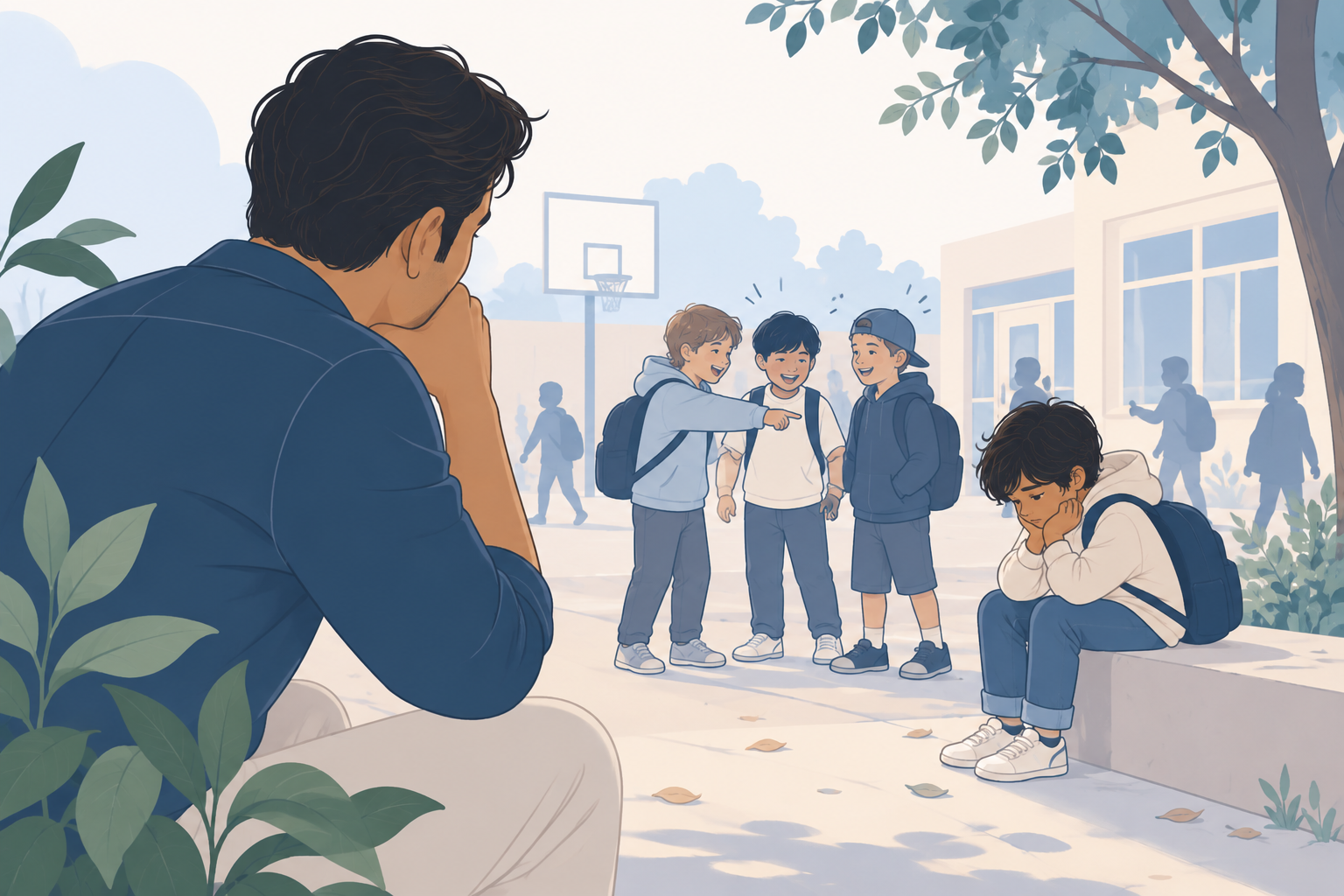
I’ll offer one important caveat that is pretty nuanced. Smell is our most primal sense, and people are judgmental of strong smells throughout their lives at every level of maturity, so let’s be honest that if you can help him out in making sure he’s not going into school doused in the strong smells of Indian cooking, you should consider it. If he needs an introduction to deodorant, that serves him in the long run too. Making adjustments based on mean comments can feel like it’s giving the bully a win, but feeling accepted and safe is an integral part of childhood, and if we’re growing, that’s our growth regardless of how others perceive it. There is a raging debate in America right now about how to find the balance between assimilation into American culture and retention of our traditions, and I don’t think falling to either extreme is going to help you or your kiddo.
As for the teacher: I think you'll get more clarity on that question once you've had the conversation above. If your child is genuinely feeling unsafe or diminished at school, it's worth checking in with the teacher — both to make sure they're aware and to hear what they'd recommend. Most teachers have only the best intentions for their students, and approaching them assuming they can and will help, rather than assuming they're part of the problem, gives you the best shot at making them a real partner in this. This guide from the Hindu American Foundation has great tips on talking to teachers, as well as responding to peer challenges.
As always, live the values you want your kid to imbibe. Talk to him about the challenges you face socially, how you choose to respond, and how you come to those conclusions. Show him how you use the stories in our scriptures to figure out what you want to do. Even better than that is letting him see your choices first hand. Watching your kid’s distress may be what helps you be really intentional about how you show up to the conflicts in your life, and you’ll both benefit from this.
I wish you and your kiddo the best in working through this.
Have a question of your own?
Anonymous, paraphrased, answered here.
